


 Language: English











Solutions
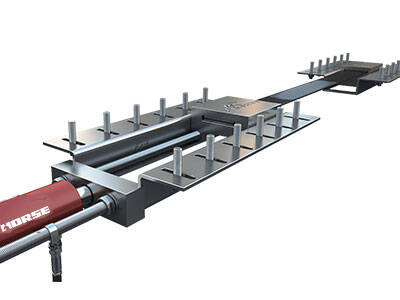
Horse Construction offers full range of structural strengthening materials with technical supports, documentation supports, products supports, project supports.
Based on ACI

Externally bonded Fiber Reinforced Polymer (FRP) Repair systems have become the industry standard for strengthening concrete structures — but the performance of any FRP system depends on far more than the fiber itself. Each component in the system, from the primer applied to the concrete surface to the protective coating applied over the cured laminate, plays a specific role in ensuring the strengthened member performs as designed.
ACI 440 — the authoritative guide for externally bonded FRP systems — defines the constituent materials that make up a complete FRP strengthening system. This article breaks down each component, explains why it matters, and provides practical guidance for engineers and contractors specifying FRP systems.
1. The FRP Repair System: More Than Just Fiber
A commercially available FRP repair system includes all resins, primers, putties, saturants, adhesives, and fibers. These components have been developed and tested together as a matched system — not as individual materials selected independently.
This is a critical point. The bond between the fiber and the concrete substrate, the load transfer through the resin matrix, and the environmental durability of the cured system all depend on the compatibility of each component.
2. Resins: The Backbone of Load Transfer
Resins are the polymeric materials that bind the FRP system together and transfer load between the fiber reinforcement and the concrete substrate.
3. The Four Resin Functions in an FRP System
Within a complete FRP system, resins serve four distinct functions depending on where they are applied in the build-up.
3.1 Primer
The primer is applied directly to the prepared concrete surface before any other FRP component. Its function is to penetrate the surface of the concrete, providing an improved adhesive bond for the saturating resin or adhesive.
Concrete is a porous, heterogeneous material with surface tensile strength typically ranging from 1.5 to 3.5 MPa. The primer penetrates the surface capillary pores, fills micro-voids, and creates a resin-rich layer that:
- Seals the concrete surface, preventing air outgassing during saturating resin application
- Improves wetting of the subsequent resin layer
- Increases the effective bond area at the concrete-resin interface
- Provides a uniform substrate for bond-critical applications
Practical note: Primer viscosity is formulated for deep penetration — typically much lower than the saturating resin. Applying primer at the coverage rate specified by the manufacturer (typically 0.2–0.5 kg/m²) is essential. Over-application creates a weak, resin-rich layer; under-application leaves unsealed concrete that absorbs resin from the next layer.
3.2 Putty Filler
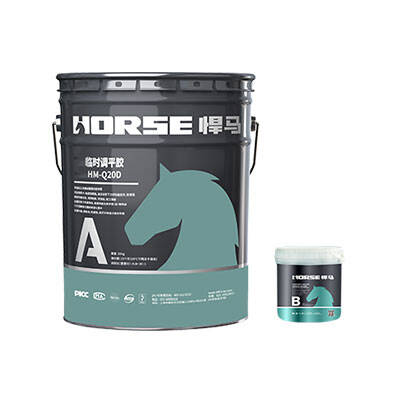
Putty is applied after the primer cures. Its function is to fill small surface voids such as bug holes and provide a smooth surface to which the FRP system can bond. Filled surface voids also prevent air bubbles from forming during curing of the saturating resin.
Concrete surfaces inevitably contain bug holes (small air voids at the formed surface), pop-outs, and minor irregularities. If left unfilled, these defects create:
- Air entrapment beneath the FRP laminate, leading to localized debonding
- Stress concentrations at void edges during loading
- Reduced effective bond area
- Potential moisture channels that accelerate environmental degradation
Practical note: Putty is typically a thixotropic paste with high filler content, applied by trowel or squeegee. It must be applied only after the primer has cured to the manufacturer's specified tack-free state. Applying putty over wet primer traps solvents and weakens the bond line.
3.3 Saturating Resin
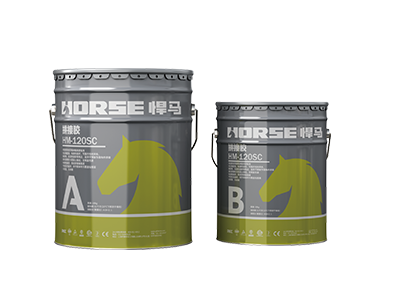
The saturating resin is the workhorse of wet lay-up FRP systems. Its function is to impregnate the reinforcing fibers, fix them in place, and provide a shear load path to effectively transfer load between fibers.
In a wet lay-up system, dry fiber fabric is saturated on-site with the saturating resin and applied to the prepared surface. The saturating resin also serves as the adhesive between the previously primed concrete substrate and the FRP system — meaning it performs a dual structural role.
Key properties of a saturating resin include:
- Low enough viscosity to fully wet out the fiber bundle without dry spots
- Sufficient open time to complete impregnation and placement before gelation
- High cohesive strength to transfer shear between fiber layers and to the substrate
- Appropriate cure profile to reach design mechanical properties within the project schedule
Practical note: Incomplete saturation is one of the most common installation defects. Dry fiber bundles that are not fully wetted create zones of zero tensile capacity within the cured laminate. Quality control requires visual inspection for white or dry spots, and periodic pull-off testing to verify bond strength.
3.4 Structural Adhesive
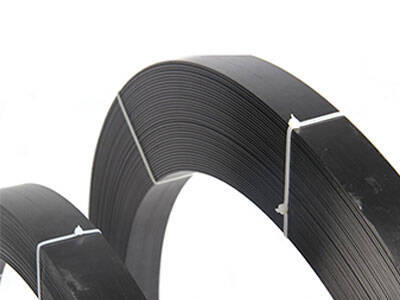
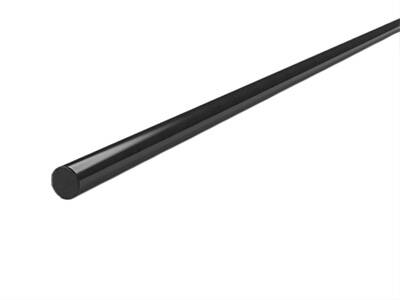
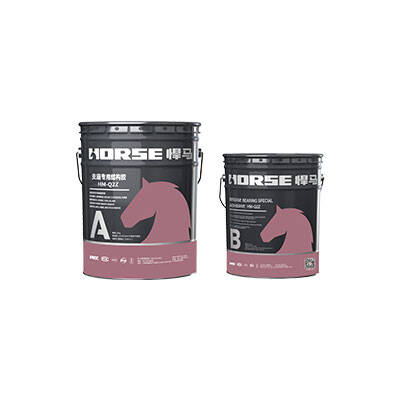
Adhesives are used in pre-cured FRP systems — specifically for bonding pre-cured FRP laminates (plates) and near-surface-mounted (NSM) FRP bars or strips to the concrete substrate. The adhesive provides a shear load path between the concrete and the FRP reinforcing system. Adhesives are also used to bond together multiple layers of pre-cured FRP laminates.
Unlike saturating resins, structural adhesives for pre-cured systems are formulated for:
- Higher viscosity (paste consistency) to support the weight of the laminate without sagging
- Higher cohesive strength to resist peel and shear at the bond line
- Thixotropic behavior to maintain bond line thickness on vertical and overhead surfaces
- Controlled exotherm for thicker bond lines without thermal degradation
Practical note: Bond line thickness for pre-cured laminates is typically 1.5–3 mm. Insufficient adhesive creates voids and stress concentrations; excessive thickness increases creep deformation under sustained load. The manufacturer's specified notched trowel or spacer system controls bond line thickness during installation.

4. Fibers: The Load-Carrying Reinforcement
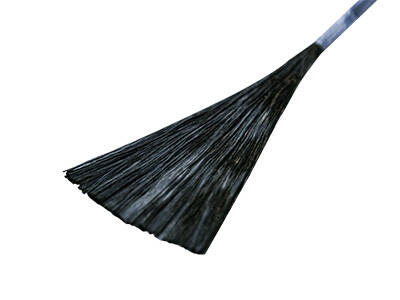
Fibers are the continuous glass, basalt, aramid, or carbon reinforcements used in FRP systems. They provide the strength and stiffness that make FRP strengthening effective. ACI 440.2R recognizes four fiber families:
4.1 Carbon Fiber
Carbon fiber is the dominant choice for structural strengthening due to its superior mechanical properties:
Tensile strength: 2,400–5,000 MPa (5–10× structural steel)
Elastic modulus: 150–250 GPa (comparable to steel)
Density: 1.5–1.8 g/cm³ (~1/5 of steel)
Chemical inertness: unaffected by concrete alkalinity
Fatigue resistance: superior to steel under cyclic loading
Carbon fiber is available in different grades — high-strength (standard modulus), high-modulus, and ultra-high-modulus — each with different strength/stiffness trade-offs. For most building and bridge strengthening applications, standard-modulus high-strength carbon fiber provides the best balance of performance and cost.
4.2 Glass Fiber
Glass fiber offers a cost-effective alternative for moderate strengthening demands:
Tensile strength: 800–1,500 MPa
Elastic modulus: 40–85 GPa
Density: 2.0–2.5 g/cm³
Electrical insulation: non-conductive, safe near electrical infrastructure
Glass fibers are classified by composition: E-glass (general purpose), S-glass (higher strength), and AR-glass (alkali-resistant, containing ≥16% zirconia for direct concrete contact). For externally bonded systems where the FRP is separated from concrete by an adhesive layer, standard E-glass is acceptable. For embedded or NSM applications in direct contact with cementitious materials, AR-glass must be specified.
4.3 Aramid Fiber
Aramid fiber (aromatic polyamide) provides unique properties for specialized applications:
Tensile strength: 2,000–3,500 MPa
Elastic modulus: 70–125 GPa
Density: 1.4 g/cm³ (lowest of all structural fibers)
Impact resistance: exceptional energy absorption
Limitation: moisture absorption, UV sensitivity, and compressive weakness
Aramid FRP is used primarily in blast retrofitting, impact-resistant panels, and applications requiring non-brittle failure behavior.
4.4 Basalt Fiber
Basalt fiber, produced from volcanic rock, has emerged as a middle-ground option:
Tensile strength: 1,100–1,700 MPa
Elastic modulus: 80–100 GPa
Density: 2.6–2.7 g/cm³
Alkaline resistance: better than E-glass, though less studied than carbon
Basalt FRP is increasingly used in marine structures, masonry reinforcement, and TRM/FRCM textile systems.
5. Protective Coatings
Protective coatings protect the bonded FRP reinforcement from potentially damaging environmental and mechanical effects. Coatings are typically applied to the exterior surface of the FRP system after some prescribed degree of adhesive or saturating resin cure.
Why protective coatings are required?
The polymer matrix (epoxy resin) in FRP systems is sensitive to:
UV radiation — causes surface chalking, discoloration, and gradual matrix degradation
Moisture ingress — can plasticize the resin and reduce fiber-matrix bond over time
Mechanical damage — impact, abrasion, and vandalism can expose bare fiber
Chemical exposure — acids, solvents, and fuels can attack the resin matrix
Fire — epoxy matrices lose structural integrity above 65–80°C (glass transition temperature, Tg)
The performance of an FRP strengthening system is determined by the interaction of all constituent materials — not by the fiber alone. ACI 440.2R's framework for constituent materials provides engineers with a clear structure for specifying, reviewing, and installing FRP systems:
Resins must demonstrate compatibility with the concrete substrate, the fiber, and the environment — while providing the filling ability, workability, and mechanical properties needed for the application.
Four resin functions (primer, putty, saturating resin, adhesive) each serve a specific structural purpose in the system build-up.
Fibers (carbon, glass, aramid, basalt) provide the strength and stiffness, with selection driven by the structural demand and environmental exposure.
Protective coatings shield the cured system from UV, moisture, mechanical damage, and fire.
System qualification validates the matched assembly — and any component substitution voids that qualification.

Horse Construction provides complete, matched FRP strengthening systems — including primers, putties, saturating resins, structural adhesives, and carbon fiber reinforcement — qualified as integrated systems in accordance with ACI 440.2R and related international standards. Our technical team supports engineers and contractors with system selection, design review, and installation training.
Contact us for system qualification documentation and project-specific technical support.
You can find anything here you are in need of, have a trust trying on these products, you will find the big difference after that.

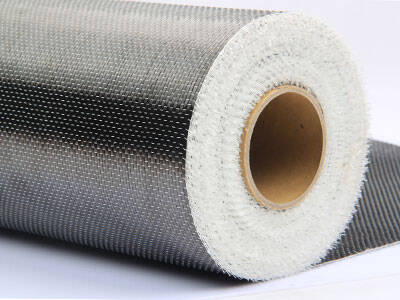
High strength, unidirectional carbon fiber wrap pre-saturated to form a carbon fiber reinforced polymer (CFRP) wrap used to strengthen structural concrete elements.

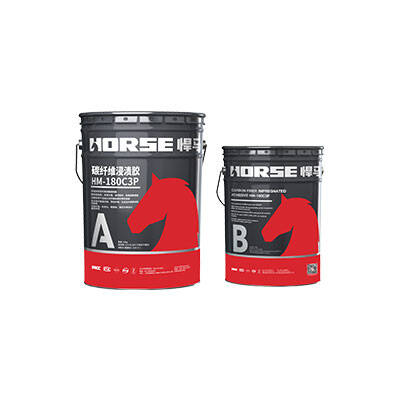
Low viscosity, strong penetration carbon fiber primer for reinforced concrete surface to enhace the defect part

Good thixotropy carbon fiber leveling adhesive for concrete surface repairing
